

Since my last commentary, the tension facing investors has become clearer. The economy continues to absorb higher energy costs and trade uncertainty, while the AI investment cycle supports spending and earnings. Yet the cost of capital is rising, several major central banks are tightening again, and markets depend heavily on continued strength in a relatively narrow group of businesses. These forces are connected. AI investment supports growth but also adds to demand for power, equipment and financing. Rising equity prices support household spending, helping sustain activity even as inflation erodes purchasing power. That resilience gives central banks less room to ease. The multi-asset portfolios managed by our team continue to participate in these opportunities, but we are increasingly concerned that the AI boom is approaching its later stages.

In the following 5-minute video, Blair Setford, AVP, Product Management, Canada Life Investment Management Ltd. discusses the themes shaping markets today and what they could mean for investors as we move into the final quarter of the year and look toward 2027. Blair notes that the third quarter of 2026 was a reminder that markets can continue moving higher even when the economic backdrop becomes more challenging. Global equity markets reached new record highs despite renewed inflation pressures, rising bond yields, geopolitical uncertainty and increasing concerns about government debt. Much of the market's strength, and some of its volatility, continued to be driven by artificial intelligence as businesses invested heavily in the infrastructure, software and technologies supporting the next stage of AI adoption. While technology remained a key market leader, investor interest broadened across other sectors, reflecting a more selective and balanced market environment. History tells us that transformative innovations can create opportunities far beyond the companies receiving the most attention today, and he believes that remains an important theme for long-term investors. Another key development during the quarter was the return of inflation concerns. Higher energy prices and ongoing geopolitical tensions contributed to inflationary pressures that prompted central banks to maintain a cautious stance. Expectations for interest rate cuts faded as the U.S. Federal Reserve and European Central Bank signalled that further rate increases may still be necessary. Bond markets also felt the impact. Long-term yields moved higher as investors adjusted to the possibility that inflation and interest rates could remain elevated for longer. While higher yields have weighed on bond prices, they have also improved income opportunities and restored a level of fixed income attractiveness not seen for many years. Closer to home, Canada's economy continued to show resilience, although trade tensions, softer growth and employment concerns created a more challenging backdrop. In contrast, the U.S. economy remained relatively strong, supported by healthy business investment, a solid labour market and continued AI-related spending. Looking ahead, our portfolio management team remains constructive on the global outlook, but increasingly focused on selectivity. Corporate fundamentals remain generally healthy and the AI investment cycle continues to support growth. At the same time, inflation, interest rates and fiscal pressures remain important risks to monitor. Blair concludes by recommending that investors with concerns about their portfolios should consult their financial advisor.
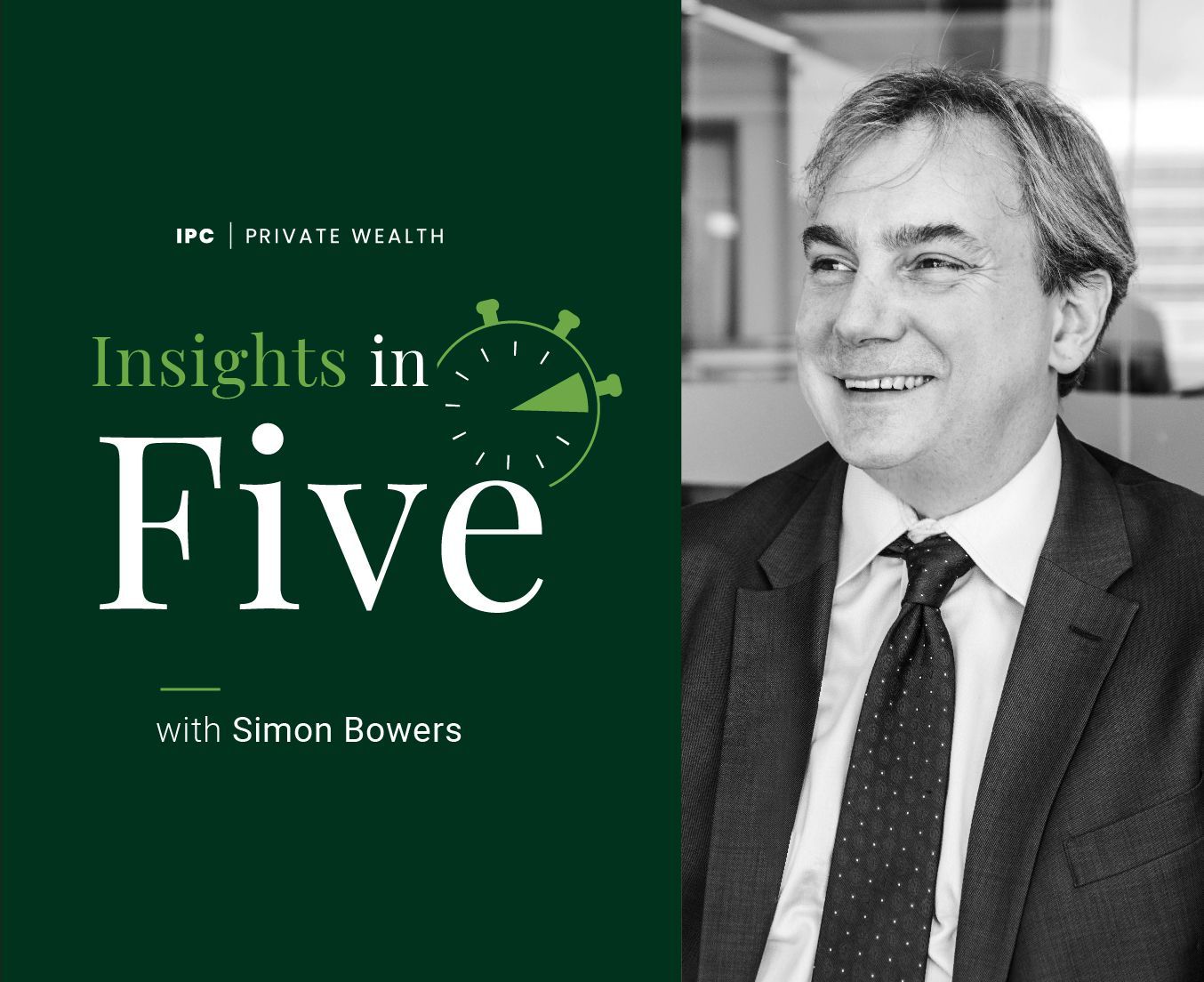
In the following five-minute video, Simon Bowers, Private Wealth Portfolio Manager with IPC Wealth, discusses the key events that shaped markets during the third quarter and what investors should be watching as the year progresses. Simon notes that the third quarter delivered a mixed performance for investors. Equity markets posted modest gains, led in part by continued enthusiasm around artificial intelligence, while bond markets faced headwinds amid persistent inflation concerns and elevated interest rates. At the same time, uncertainty surrounding global trade and geopolitics continued to influence market sentiment. A key theme during the quarter was the impact of U.S. policy decisions on inflation and economic growth. Tariffs remain central to U.S. trade policy and, combined with higher energy and transportation costs, have contributed to rising prices across the economy. Inflation has remained above the levels targeted by central banks, prompting the U.S. Federal Reserve to maintain a restrictive interest-rate environment. While higher rates are intended to slow inflation, they have also increased borrowing costs and added pressure to economic growth. Despite these challenges, investors should remember that the U.S. stock market is not simply a reflection of the domestic economy. Many of the companies that make up major U.S. indices generate revenue around the world, providing exposure to global economic activity even during periods of slower growth at home. Outside the United States, governments and businesses are increasingly seeking opportunities to diversify trade relationships and invest in long-term economic infrastructure. In Canada, initiatives aimed at improving productivity, strengthening domestic growth and expanding market access could help support future economic resilience. Looking ahead, Simon believes markets may remain volatile as investors assess evolving trade policies, geopolitical developments and upcoming political events. While uncertainty can feel uncomfortable, it is a normal part of investing. History has consistently shown that staying invested through periods of market turbulence has been one of the most effective ways to benefit from the long-term growth potential of financial markets. Investors concerned about short-term volatility should speak with their advisor to ensure their portfolio remains aligned with their goals and time horizon.
The recent sell-off in AI-related stocks reflects a more demanding question from investors: can the revenues justify the spending? That question has become harder to answer as borrowing costs rise, inflation limits central banks’ flexibility, and market leadership narrows. These pressures reinforce one another, leaving less room for companies to disappoint. We believe this interaction is central to understanding the volatility. Confidence in AI’s long-term potential can remain intact while investors reassess the profits, financing and valuations attached to its development. A technology can change the economy without rewarding every company building it, or every investor financing the expansion. The latest decline does not establish that the investment boom has ended. It reveals how dependent markets have become on its continuation.
In the following 5-minute video, Blair Setford, AVP, Product Management, Canada Life Investment Management Ltd. discusses the themes shaping markets today and what they could mean for investors as we move into the final quarter of the year and look toward 2027. Blair notes that the third quarter of 2026 was a reminder that markets can continue moving higher even when the economic backdrop becomes more challenging. Global equity markets reached new record highs despite renewed inflation pressures, rising bond yields, geopolitical uncertainty and increasing concerns about government debt. Much of the market's strength, and some of its volatility, continued to be driven by artificial intelligence as businesses invested heavily in the infrastructure, software and technologies supporting the next stage of AI adoption. While technology remained a key market leader, investor interest broadened across other sectors, reflecting a more selective and balanced market environment. History tells us that transformative innovations can create opportunities far beyond the companies receiving the most attention today, and he believes that remains an important theme for long-term investors. Another key development during the quarter was the return of inflation concerns. Higher energy prices and ongoing geopolitical tensions contributed to inflationary pressures that prompted central banks to maintain a cautious stance. Expectations for interest rate cuts faded as the U.S. Federal Reserve and European Central Bank signalled that further rate increases may still be necessary. Bond markets also felt the impact. Long-term yields moved higher as investors adjusted to the possibility that inflation and interest rates could remain elevated for longer. While higher yields have weighed on bond prices, they have also improved income opportunities and restored a level of fixed income attractiveness not seen for many years. Closer to home, Canada's economy continued to show resilience, although trade tensions, softer growth and employment concerns created a more challenging backdrop. In contrast, the U.S. economy remained relatively strong, supported by healthy business investment, a solid labour market and continued AI-related spending. Looking ahead, our portfolio management team remains constructive on the global outlook, but increasingly focused on selectivity. Corporate fundamentals remain generally healthy and the AI investment cycle continues to support growth. At the same time, inflation, interest rates and fiscal pressures remain important risks to monitor. Blair concludes by recommending that investors with concerns about their portfolios should consult their financial advisor.
In the following five-minute video, Simon Bowers, Private Wealth Portfolio Manager with IPC Wealth, discusses the key events that shaped markets during the third quarter and what investors should be watching as the year progresses. Simon notes that the third quarter delivered a mixed performance for investors. Equity markets posted modest gains, led in part by continued enthusiasm around artificial intelligence, while bond markets faced headwinds amid persistent inflation concerns and elevated interest rates. At the same time, uncertainty surrounding global trade and geopolitics continued to influence market sentiment. A key theme during the quarter was the impact of U.S. policy decisions on inflation and economic growth. Tariffs remain central to U.S. trade policy and, combined with higher energy and transportation costs, have contributed to rising prices across the economy. Inflation has remained above the levels targeted by central banks, prompting the U.S. Federal Reserve to maintain a restrictive interest-rate environment. While higher rates are intended to slow inflation, they have also increased borrowing costs and added pressure to economic growth. Despite these challenges, investors should remember that the U.S. stock market is not simply a reflection of the domestic economy. Many of the companies that make up major U.S. indices generate revenue around the world, providing exposure to global economic activity even during periods of slower growth at home. Outside the United States, governments and businesses are increasingly seeking opportunities to diversify trade relationships and invest in long-term economic infrastructure. In Canada, initiatives aimed at improving productivity, strengthening domestic growth and expanding market access could help support future economic resilience. Looking ahead, Simon believes markets may remain volatile as investors assess evolving trade policies, geopolitical developments and upcoming political events. While uncertainty can feel uncomfortable, it is a normal part of investing. History has consistently shown that staying invested through periods of market turbulence has been one of the most effective ways to benefit from the long-term growth potential of financial markets. Investors concerned about short-term volatility should speak with their advisor to ensure their portfolio remains aligned with their goals and time horizon.
The recent sell-off in AI-related stocks reflects a more demanding question from investors: can the revenues justify the spending? That question has become harder to answer as borrowing costs rise, inflation limits central banks’ flexibility, and market leadership narrows. These pressures reinforce one another, leaving less room for companies to disappoint. We believe this interaction is central to understanding the volatility. Confidence in AI’s long-term potential can remain intact while investors reassess the profits, financing and valuations attached to its development. A technology can change the economy without rewarding every company building it, or every investor financing the expansion. The latest decline does not establish that the investment boom has ended. It reveals how dependent markets have become on its continuation.
Since my last commentary, the tension facing investors has become clearer. The economy continues to absorb higher energy costs and trade uncertainty, while the AI investment cycle supports spending and earnings. Yet the cost of capital is rising, several major central banks are tightening again, and markets depend heavily on continued strength in a relatively narrow group of businesses. These forces are connected. AI investment supports growth but also adds to demand for power, equipment and financing. Rising equity prices support household spending, helping sustain activity even as inflation erodes purchasing power. That resilience gives central banks less room to ease. The multi-asset portfolios managed by our team continue to participate in these opportunities, but we are increasingly concerned that the AI boom is approaching its later stages.
I have recently returned from the Brooks Range in Alaska, where I was fortunate to spend an extended period in the wilderness with my son. I had hoped the markets might observe my out-of-office notice and remain quiet in my absence. Predictably, they did not. Since my last commentary on July 30th, there has been no shortage of activity for investors to absorb. The intervening period has brought renewed uncertainty around CUSMA, Canadian retaliatory tariffs, a more complicated Bank of Canada message, stronger US economic data, sticky inflation risk, a possible turn in Federal Reserve policy, and another move higher in long-term bond yields. Beneath those headlines, the broader story is that the global economy continues to absorb shocks better than expected, while the interest rate and policy backdrop has become less forgiving. Investors are therefore dealing with a more nuanced environment than the daily headlines suggest. Growth has slowed in some areas, but it has not broken. Labour markets have cooled, but they have not collapsed. Inflation has improved from its peak, but it has not fully returned to a comfortable target-consistent path. Central banks do not want to over-tighten into pockets of weakness, but they also cannot declare victory too early.
Long-term government bond yields have risen across many major markets to levels not seen in decades (1). Investors are increasingly demanding compensation for long term risk, inflation uncertainty, elevated borrowing needs, and reduced central bank support. Together, these forces reflect a significant shift from the low-yield, quantitative easing-driven environment that prevailed for much of the past decade. This is about more than just the bond market. Long-term bond yields play a central role in the global financial system, influencing borrowing costs, capital allocation decisions, and asset valuations. Their impact extends from corporate financing and real estate prices to equity discount rates. However, the rise in yields has been concentrated at the longer end of the curve and, on its own, does not necessarily indicate a meaningful deterioration in economic fundamentals (2). Investors also appear skeptical of central bank measures intended to stabilize bond markets, as bond yields continue to rise even after these measures are announced. While initiatives such as bond buyback programs may improve market liquidity, they do little to address the underlying challenge of growing debt issuance. Hyperscalers such as Meta, Oracle, and Amazon are issuing unprecedented volumes of long-term debt (3) to finance data centre expansion and artificial intelligence investments. This is increasing competition for investor capital at the long end of the yield curve, alongside elevated government borrowing needs to fund fiscal programs. The Canadian story is not materially different. While Canada has generally maintained stronger fiscal metrics than many G7 peers, long-term Government of Canada bond yields (4) have moved higher alongside global markets as investors reassess inflation risk, debt supply, and term premiums.
In the following 5-minute video, Blair Setford, AVP, Product Management, Canada Life Investment Management Ltd. discusses the themes shaping markets today and what they could mean for investors as we move into the final quarter of the year and look toward 2027. Blair notes that the third quarter of 2026 was a reminder that markets can continue moving higher even when the economic backdrop becomes more challenging. Global equity markets reached new record highs despite renewed inflation pressures, rising bond yields, geopolitical uncertainty and increasing concerns about government debt. Much of the market's strength, and some of its volatility, continued to be driven by artificial intelligence as businesses invested heavily in the infrastructure, software and technologies supporting the next stage of AI adoption. While technology remained a key market leader, investor interest broadened across other sectors, reflecting a more selective and balanced market environment. History tells us that transformative innovations can create opportunities far beyond the companies receiving the most attention today, and he believes that remains an important theme for long-term investors. Another key development during the quarter was the return of inflation concerns. Higher energy prices and ongoing geopolitical tensions contributed to inflationary pressures that prompted central banks to maintain a cautious stance. Expectations for interest rate cuts faded as the U.S. Federal Reserve and European Central Bank signalled that further rate increases may still be necessary. Bond markets also felt the impact. Long-term yields moved higher as investors adjusted to the possibility that inflation and interest rates could remain elevated for longer. While higher yields have weighed on bond prices, they have also improved income opportunities and restored a level of fixed income attractiveness not seen for many years. Closer to home, Canada's economy continued to show resilience, although trade tensions, softer growth and employment concerns created a more challenging backdrop. In contrast, the U.S. economy remained relatively strong, supported by healthy business investment, a solid labour market and continued AI-related spending. Looking ahead, our portfolio management team remains constructive on the global outlook, but increasingly focused on selectivity. Corporate fundamentals remain generally healthy and the AI investment cycle continues to support growth. At the same time, inflation, interest rates and fiscal pressures remain important risks to monitor. Blair concludes by recommending that investors with concerns about their portfolios should consult their financial advisor.
In the following five-minute video, Simon Bowers, Private Wealth Portfolio Manager with IPC Wealth, discusses the key events that shaped markets during the third quarter and what investors should be watching as the year progresses. Simon notes that the third quarter delivered a mixed performance for investors. Equity markets posted modest gains, led in part by continued enthusiasm around artificial intelligence, while bond markets faced headwinds amid persistent inflation concerns and elevated interest rates. At the same time, uncertainty surrounding global trade and geopolitics continued to influence market sentiment. A key theme during the quarter was the impact of U.S. policy decisions on inflation and economic growth. Tariffs remain central to U.S. trade policy and, combined with higher energy and transportation costs, have contributed to rising prices across the economy. Inflation has remained above the levels targeted by central banks, prompting the U.S. Federal Reserve to maintain a restrictive interest-rate environment. While higher rates are intended to slow inflation, they have also increased borrowing costs and added pressure to economic growth. Despite these challenges, investors should remember that the U.S. stock market is not simply a reflection of the domestic economy. Many of the companies that make up major U.S. indices generate revenue around the world, providing exposure to global economic activity even during periods of slower growth at home. Outside the United States, governments and businesses are increasingly seeking opportunities to diversify trade relationships and invest in long-term economic infrastructure. In Canada, initiatives aimed at improving productivity, strengthening domestic growth and expanding market access could help support future economic resilience. Looking ahead, Simon believes markets may remain volatile as investors assess evolving trade policies, geopolitical developments and upcoming political events. While uncertainty can feel uncomfortable, it is a normal part of investing. History has consistently shown that staying invested through periods of market turbulence has been one of the most effective ways to benefit from the long-term growth potential of financial markets. Investors concerned about short-term volatility should speak with their advisor to ensure their portfolio remains aligned with their goals and time horizon.
The recent sell-off in AI-related stocks reflects a more demanding question from investors: can the revenues justify the spending? That question has become harder to answer as borrowing costs rise, inflation limits central banks’ flexibility, and market leadership narrows. These pressures reinforce one another, leaving less room for companies to disappoint. We believe this interaction is central to understanding the volatility. Confidence in AI’s long-term potential can remain intact while investors reassess the profits, financing and valuations attached to its development. A technology can change the economy without rewarding every company building it, or every investor financing the expansion. The latest decline does not establish that the investment boom has ended. It reveals how dependent markets have become on its continuation.

Estate planning helps protect your loved ones, clarify your wishes, and manage your legacy. Learn why it's an essential part of every financial plan.

When it comes to planning your estate, there are some decisions you’ll want to consider well in advance. This blog will help prime you for one of the most important decisions you can make when you’re planning an estate: how to choose an executor.

Estate planning is a formalized plan which specifies details regarding the management and transfer of your estate in the event of your incapacitation or death.